
General Comments No.1 on Article 14 (1) (d) and (e) of the Protocol to the African Charter on Human and Peoples’ Rights on the Rights of Women in Africa
The Protocol to the African Charter on Human and Peoples’ Rights on the Rights of Women in Africa (the Maputo Protocol) is the first international legally binding human rights instrument to recognize the intersection between women’s human rights and HIV. In Article 14 (1) (d) and (e), the Maputo Protocol lays down women’s right to self-protection and to be protected from HIV infection, as well as their right to be informed of their HIV status and the HIV status of their partners in accordance with international standards and practices in force. As such, the Maputo Protocol is therefore, in practice, an important tool towards the alleviation of the disproportionate effect of the HIV pandemic on the lives of women in Africa. Even though considered as a landmark, the provisions of the Maputo Protocol on HIV are not very explicit on the measures to be taken by States Parties to ensure the full implementation of women’s rights to sexual and reproductive health. In order to meet this objective, the African Commission on Human and Peoples’ Rights (the Commission) adopted these General Comments on Article 14 (1) (d) and (e) at its 52nd Ordinary Session held from 9 to 22 October 2012 in Yamoussoukro, Côte d’Ivoire.
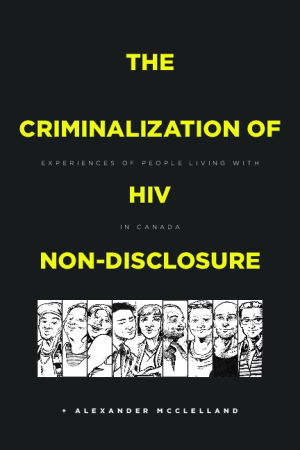
The Criminalization of HIV Non-Disclosure – Experiences of people living with HIV In Canada
This is the first known qualitative research study in Canada examining the phenomena of criminal and public health charges for HIV non-disclosure from the perspectives of those who have lived it.
The project examined the experiences of people living with HIV who were charged, prosecuted, or threatened with criminal and public health charges in Canada because they had been alleged to not tell sex partners of their HIV-positive status. The project was conducted between January 2016 to January 2019.
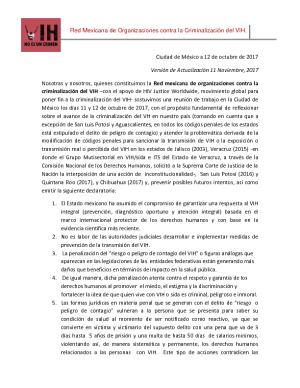
Red Mexicana de Organizaciones contra la Criminalización del VIH
Declaración de posicionamiento de las organizaciones integrantes de la Red Mexicana de Organizaciones contra la criminalización del VIH, en la que se pronuncian en contra de cualquier tipo de criminalización de la transmisión de este virus, ya que van en contra de los derechos humanos, y nos coloca a todos en una situación de riesgo y vulnerabilidad frente al VIH. Las organizaciones, junto con otros firmantes, implementarán las estrategias necesarias para derogar este tipo de leyes y poner fin a cualquier intento futuro de criminalización.
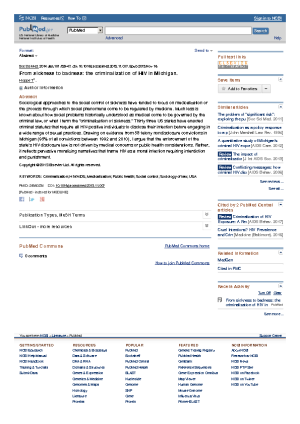
From Sickness to Badness: The Criminalization of HIV in Michigan
Found that to justify a conviction or more severe punishment, prosecutors and judges often argued that HIV infection was a death sentence; that HIV is a deadly weapon; and that HIV-positive people are homicidal threats – despite fewer than 7% of cases involving alleged infection. Medical evidence was rarely invoked in the adjudication of cases. The study concludes that enforcement of HIV disclosure laws reflects pervasive, moralising narratives.